ශ්රී ලංකා තානාපති කාර්යාලය, වොෂින්ටන් ඩී.සී., ඇමරිකා එක්සත් ජනපදය
இலங்கைத் தூதரகம், வொஷிங்டன் டி.சி, ஐக்கிய அமெரிக்கா
Embassy of Sri Lanka, Washington D.C.,United States
Sri Lanka-Mexico Bilateral Relations
Sri Lanka (Ceylon) and Mexico established diplomatic relations twelve years after Ceylon's independence, on April 19, 1960. This was an era when Ceylon began to extend its diplomatic engagements beyond the predominantly Commonwealth-focused orientation of its immediate post-independence era, and started developing a broader network of relations with countries in Asia, Africa and Latin America, within the context of emerging South–South diplomacy.
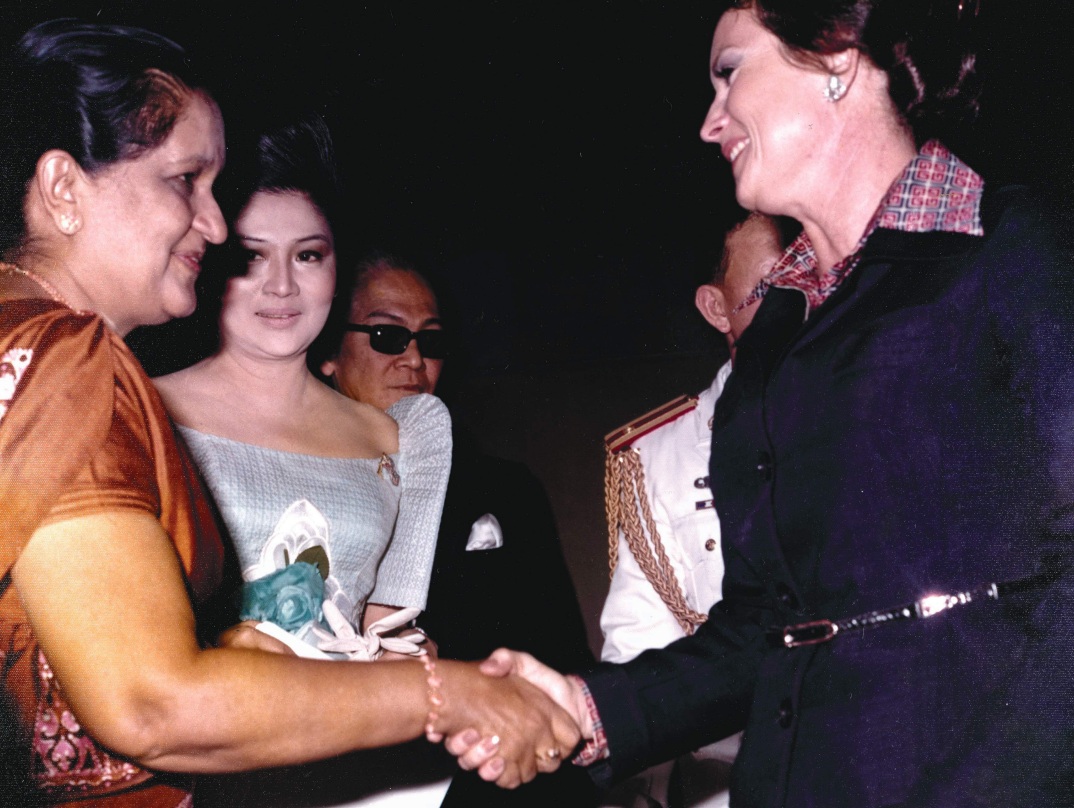
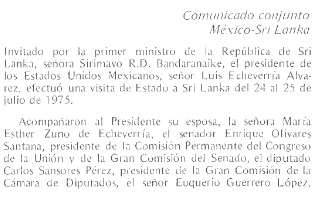
A significant early diplomatic exchange occurred when Sri Lankan Prime Minister Sirimavo Bandaranaike visited Mexico City in June 1975 to attend the ‘First World Conference on Women’, where she delivered the keynote address. During this visit, she met with Mexican President Luis Echeverría Álvarez to discuss international affairs, disarmament, the Law of the Sea, and economic relations. Subsequently, in July 1975, Mexican President Luis Echeverría Álvarez also visited Sri Lanka, during which the two governments explored avenues for substantive bilateral cooperation.
In 1976, Mexican Foreign Minister Alfonso García Robles visited Sri Lanka to participate in the Non-Aligned Movement conference in Colombo. During this period both countries have worked closely on issues pertinent to South–South cooperation and increasingly utilizing diplomatic institutions to promote collaboration among developing nations.
Contemporary Political Relations:
In 2025, Sri Lanka and Mexico commemorated the 65th anniversary of their diplomatic relations. Currently, the two nations sustain amicable diplomatic ties through continuous dialogue, cultural exchanges, bilateral trade, and diplomatic interactions.
Sri Lanka is accredited to Mexico through its Ambassador stationed in Washington, D.C., and maintains a consulate in Mexico City. Mexico is accredited to Sri Lanka via its Embassy in New Delhi, India, and operates an honorary consulate in Colombo.
Trade relations:
Prior to the establishment of formal diplomatic relations, Sri Lanka and Mexico had already developed trade connections. Historically, Ceylon cinnamon reached Mexican markets via Manila (Spanish East Indies) Galleon trade route connecting Ceylon and the Philippines to Acapulco (New Spain/Mexico) during the 16th and 17th centuries. In Mexican cuisine, Ceylon cinnamon is known as canela or ‘true’ cinnamon.
The economic significance of this relationship increased in the 1970s, particularly as both nations became active participants in the politics of the Global South and the Non-Aligned Movement. During the visit of Mexican President Luis Echeverría to Colombo, a Protocol on Economic Cooperation was signed on 25 July
- This protocol indicated that cinnamon and rubber were the predominant
Since the year 2000, there has been a gradual diversification of exports, including garments, rubber products, tea, cinnamon, and other agricultural products from Sri Lanka, while Mexico exported smaller quantities of manufactured and chemical products.
Contemporary trade between the two countries consistently results in a positive trade balance for Sri Lanka. In 2025, Sri Lanka exported products valued at US$189 million to Mexico, including cinnamon (US$ 90 million), coco peat/fiber pith/moulded products (US$ 22 million), men's and women's garments (US$ 48 million), and rubber tyres and tubes (US$ 7 million). Sri Lanka imports chemicals, pharmaceuticals, computers, and electrical equipment from Mexico, in small quantities.