ශ්රී ලංකා තානාපති කාර්යාලය, වොෂින්ටන් ඩී.සී., ඇමරිකා එක්සත් ජනපදය
இலங்கைத் தூதரகம், வொஷிங்டன் டி.சி, ஐக்கிய அமெரிக்கா
Embassy of Sri Lanka, Washington D.C.,United States

Sri Lanka - U.S. Defence Cooperation
The security relationship between Sri Lanka and the United States has evolved from earlier intermittent engagements into a comprehensive strategic partnership with a strong emphasis on maritime security and regional stability within the Indo-Pacific.
Initially, during the 1950s, the United States recognized Sri Lanka's strategic geographical position and began to foster security cooperation, often within the existing British Commonwealth framework. This early period saw the establishment of crucial communications infrastructure on the island and foundational efforts in enhancing military professionalization. Despite Sri Lanka's inclination towards non-alignment, the U.S. provided humanitarian flood relief and limited military aid, notably following the 1971 domestic insurgency, alongside occasional U.S. Navy port visits.
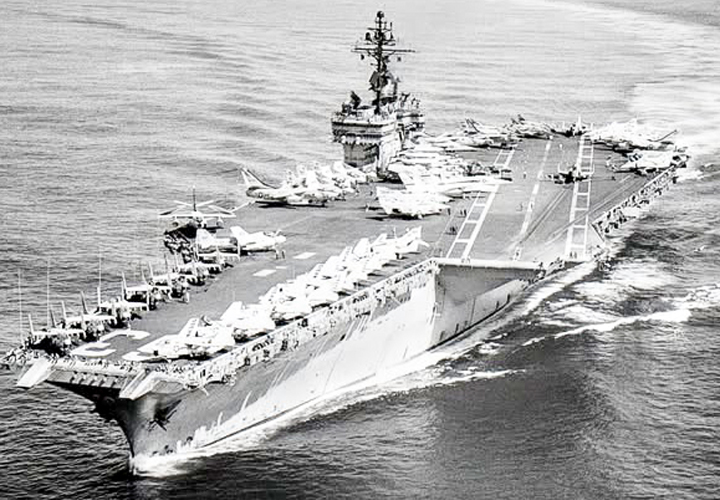
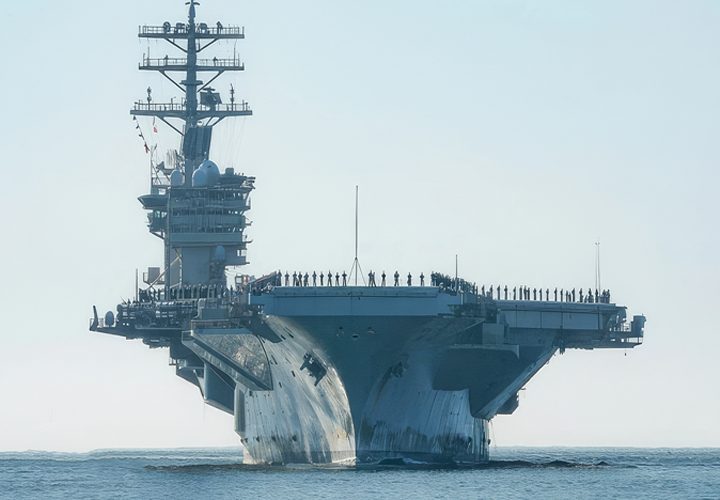
The partnership significantly deepened in the 1990s and 2000s, driven by the need for enhanced counter-terrorism capabilities. Key milestones included the signing of the Status of Forces Agreement (SOFA) in May 1995 and the subsequent Defense Assistance Agreement in 1998, which formalized military interactions. The U.S. actively supported Sri Lankan military personnel through programs like the International Military Education and Training (IMET), facilitating their attendance at U.S. military institutions. Counter-terrorism cooperation intensified with initiatives such as Operation Balanced Style, providing specialized training, and the U.S. designation of the Liberation Tigers of Tamil Eelam (LTTE) as a Foreign Terrorist Organization in 1997. Sri Lanka subsequently emerged as a vital component of the U.S. global counter-terrorism strategy. This era also saw significant humanitarian collaboration, exemplified by Operation Unified Assistance, the U.S. military's response to the 2004 tsunami, and crucial mine clearance operations. A pivotal development was the 2007 signing of the Acquisition and Cross-Servicing Agreement (ACSA), designed to streamline logistical support.
In the contemporary period, particularly since the 2010s, the bilateral security relationship has expanded into a multidimensional partnership centered on Indo-Pacific maritime security. The United States has provided the Sri Lankan military with various grants and equipment transfers over the years, focused heavily on maritime domain awareness, humanitarian assistance, disaster response, demining, and counter-explosive capabilities.
As a result of that, the U.S. has provided substantial support for enhancing the Sri Lankan Navy's capabilities, including the transfer of U.S. Coast Guard Cutters, such as SLNS Samudura in 2004, SLNS Gajabahu in 2018, SLNS Vijayabahu (P627) in 2021, and SLNS Samudravijaya (P628) in 2025. A notable collaborative achievement was the formation of the Sri Lankan Marine Corps in September 2016, with the U.S. Marine Corps providing extensive training and professional development. Ongoing capacity expansion initiatives include the Beechcraft King Air 360ER (A surveillance aircraft provided in late 2022) and TH-57 Sea Ranger helicopters to the Sri Lanka Air Force in 2027.
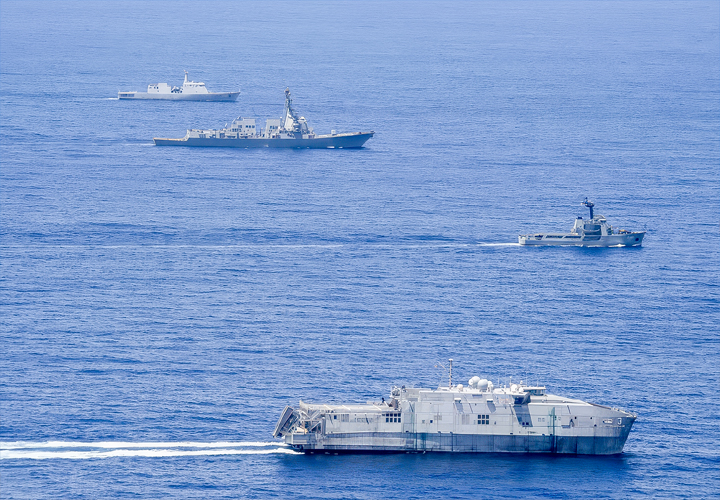
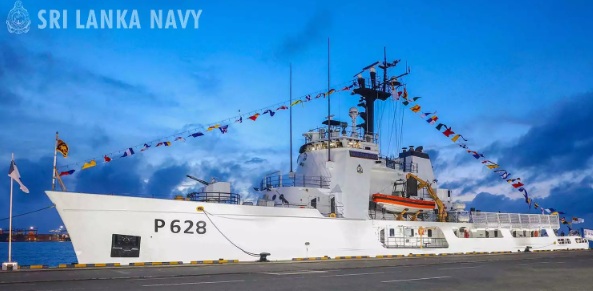
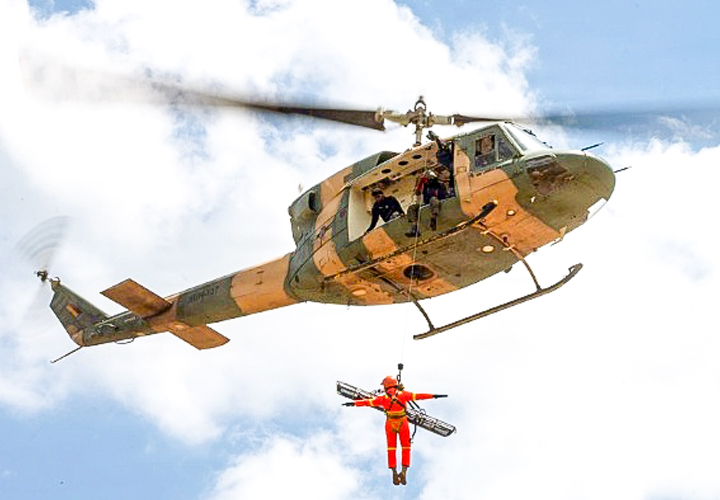
Current cooperation spans a broad spectrum of critical areas, including maritime domain awareness (MDA), counter-narcotics efforts, cyber security, port security, disaster response, and the protection of vital sea lanes. Joint military exercises between the two nations increasingly emphasize humanitarian assistance and disaster relief (HADR) readiness. Sri Lankan military personnel regularly participate in major U.S.-led multinational exercises, such as RIMPAC, Cooperation Afloat Readiness and Training (CARAT), and Operation Prosperity Guardian in the Red Sea, underscoring their growing interoperability.
MONTANA STATE PARTNERSHIP PROGRAM
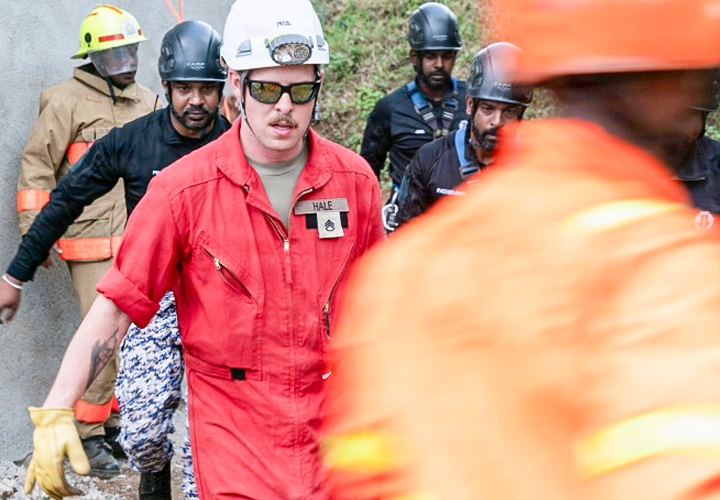
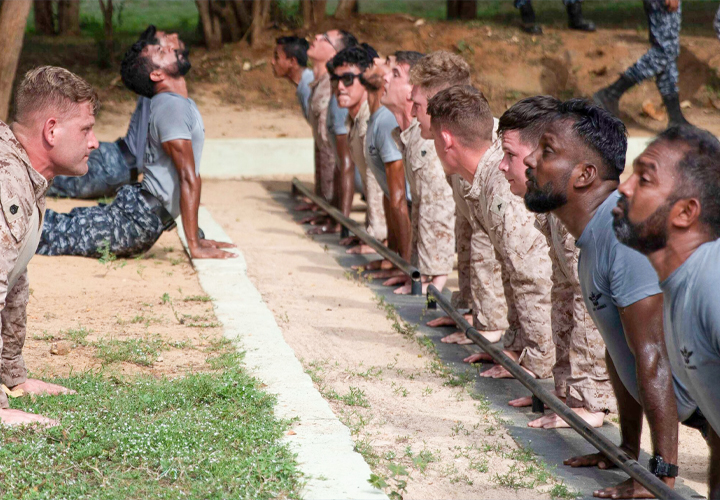
The Montana State Partnership Program (SPP) with Sri Lanka has matured significantly, evolving from an initial exchange initiative into a comprehensive, high-level framework for defense and civil-military cooperation. This partnership is strategically focused on enhancing regional stability, strengthening maritime security, and bolstering disaster response capabilities.